.svg)





.png)
.avif)
In branding and content creation, the terms brand guide and style guide are often used as if they mean the same thing. Even experienced teams mix them up, which slowly leads to inconsistency in how a brand looks, sounds, and communicates. One piece of content may feel polished, while another feels slightly off, making the overall brand presence less cohesive than it should be.
As businesses grow, more people and teams begin contributing to the brand across different platforms. Without clear and correct guidance, everyone relies on their own understanding of how the brand should be presented. This is where confusion between brand guides and style guides becomes a real issue. Understanding how these two guides differ, and how they work together, helps teams stay aligned, reduce guesswork, and build a consistent brand experience at every touchpoint.
What Is a Brand Guide?
A brand guide acts like a shared reference point for anyone working with a brand. It brings clarity to how the brand should be represented, especially when multiple people or teams are involved. Instead of relying on personal opinions or assumptions, a brand guide gives everyone the same direction to follow, helping the brand feel consistent and recognizable wherever it appears.
At its core, a brand guide focuses on the big picture. It captures the brand’s purpose, personality, and overall identity. This helps people understand not just what the brand looks like, but what it stands for and how it should make people feel. When someone new joins the team or an external agency starts working on a project, the brand guide helps them quickly understand the brand without needing long explanations.
One of the most important roles of a brand guide is setting visual direction. It usually explains how elements like logos, colors, typography, and imagery should be used. This prevents common issues such as stretched logos, inconsistent color choices, or visuals that don’t match the brand’s personality. With clear rules and examples, designers can create materials that feel like they all belong to the same brand family.
.jpg)
Beyond visuals, a brand guide also provides guidance on how the brand communicates at a higher level. This includes the brand’s tone, personality traits, and key messaging themes. For example, it explains whether the brand is bold or friendly, playful or professional, modern or traditional. This helps teams make better decisions when creating campaigns, advertisements, or branded experiences.
Another key benefit of a brand guide is long-term consistency. As a business grows, people change, and new platforms emerge, the brand guide acts as an anchor. It ensures that even as execution evolves, the brand’s identity stays intact. Without this kind of reference, brands often drift over time and lose their original character.
In short, a brand guide helps protect the brand. It aligns teams, speeds up decision-making, and ensures that every touchpoint, from a website banner to a billboard, feels intentional and on-brand.
What Is a Style Guide?
While a brand guide focuses on the big picture, a style guide is all about the details that make everyday content consistent. Think of it as a playbook for how your brand communicates in writing. It ensures that everyone, writers, editors, marketers, and even social media managers, follows the same rules so that all content feels cohesive, professional, and on-brand.
A style guide usually covers the practical side of communication. This includes spelling, grammar, punctuation, capitalization, and formatting rules. Beyond the basics, a style guide also defines tone, voice, and writing style in practical terms. While a brand guide may describe the brand as “friendly and approachable,” the style guide explains how that looks in action: the words to use, the sentence structures to prefer, and examples of what to avoid. It might provide templates for blog posts, emails, social media captions, or web content so that every piece of communication reflects the same style.
A style guide can also include rules for terminology and word choice. Many brands have terms that are specific to their industry, products, or internal culture. A style guide clarifies which terms are preferred, which should be avoided, and how to use them correctly. This helps prevent confusion and maintains clarity for both the audience and internal teams.
Finally, a style guide helps ensure consistency across platforms. Writing for social media, emails, website content, and advertisements all requires slightly different approaches, but the style guide acts as a bridge so the brand’s voice remains recognisable everywhere. Without it, each channel risks developing its own tone, which can make the brand feel fragmented.
In essence, a style guide is the step-by-step manual for expressing the brand’s voice in everyday content. It supports clarity, consistency, and professionalism in every word, ensuring that even as teams grow or content volume increases, the brand continues to speak with a unified voice.
Core Differences Between a Brand Guide and a Style Guide
Although brand guides and style guides work toward the same goal, consistency, they approach it from very different angles. Understanding these differences helps teams know which guide to use, when to use it, and why both are necessary.
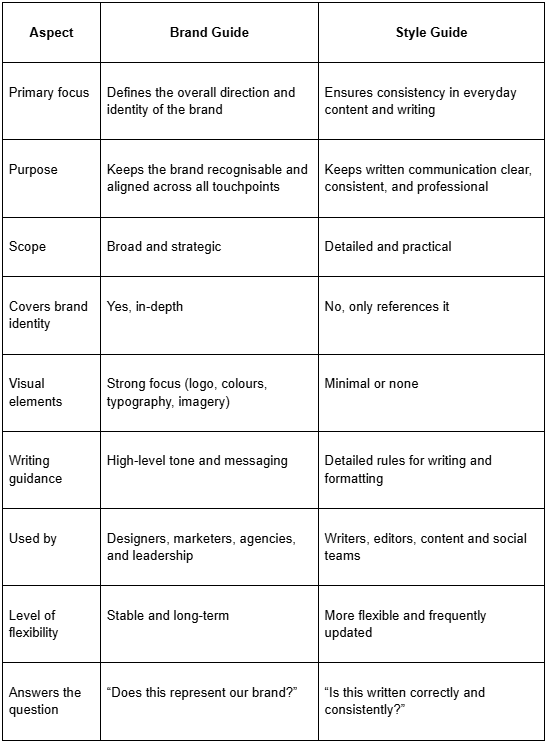
The biggest difference lies in focus. A brand guide looks at the brand from a high-level perspective. It sets direction and defines the overall identity of the brand. It helps people understand the brand’s character, values, and visual presence. A style guide, on the other hand, focuses on execution. It deals with the details of how content is written, formatted, and presented on a daily basis. One sets the direction; the other helps follow it correctly.
The type of decisions each guide supports also differs. A brand guide helps with strategic and creative decisions, such as choosing visuals for a campaign or deciding whether a concept aligns with the brand’s personality. A style guide helps with practical decisions, like how to format headings, which words to use, or how to adjust tone for different platforms.
There is also a difference in the level of flexibility. Brand guides tend to be more stable and long-term. They don’t change often because they’re tied to the brand’s core identity. Style guides are more flexible and may evolve as content needs change, new platforms emerge, or writing standards are updated.
Finally, while there is some overlap, neither guide can fully replace the other. A brand guide without a style guide leaves too much room for interpretation in writing. A style guide without a brand guide lacks context and direction. Together, they ensure that both the message and the presentation stay aligned.
In simple terms, a brand guide defines the direction, while a style guide ensures the execution stays consistent. Knowing this distinction helps teams work faster, collaborate better, and maintain a cohesive brand across all touchpoints.
The table below highlights the key differences between a brand guide and a style guide.
What a Brand Guide Typically Includes
A brand guide brings all the essential brand elements into one place so everyone works from the same reference. While every brand guide looks a little different, most include a few core sections that define how the brand should be understood and represented.
Brand Purpose and Values
Most brand guides begin with the brand’s foundation. This section explains what the brand stands for and what drives it. It helps teams understand the bigger picture so their work aligns with the brand’s intent. When people know the brand’s purpose and values, they can make decisions that feel right for the brand rather than relying on personal judgment.
Brand Personality and Tone
This section describes the overall brand personality, like how it wants to come across emotionally. Is the brand friendly or authoritative? Bold or calm? Playful or serious? Rather than focusing on grammar or writing rules, this part sets expectations for how the brand should feel in communication and interactions.
Logo Usage Guidelines
Logo guidelines are a critical part of any brand guide. This section explains how the logo should and should not be used. It often includes spacing rules, size limits, placement guidance, and examples of incorrect usage. These rules protect the brand’s visual identity and prevent distortion or misuse.
Color Palette
The color section defines the brand’s primary and secondary colors and explains how to use them. This helps maintain visual consistency across platforms and materials. Clear color rules prevent random or off-brand color choices that weaken brand recognition.
Typography
Typography guidelines outline the approved fonts and how they should be used. This may include rules for headings, body text, and digital or print usage. Consistent typography plays a major role in making the brand feel cohesive and professional.
Imagery and Visual Style
Many brand guides include guidance on photography, illustrations, icons, and overall visual mood. This section helps teams choose visuals that match the brand’s personality rather than relying on personal taste. It ensures that images feel consistent across marketing, social media, and other touchpoints.
Brand Messaging Overview
At a high level, a brand guide may outline key messaging themes or positioning ideas. This helps teams understand what the brand talks about and what it avoids, without getting into detailed writing instructions.
Examples of Proper Usage
Strong brand guides include real examples of correct and incorrect usage. These visuals and scenarios make the guidelines easier to understand and apply, reducing confusion and mistakes.
What a Style Guide Typically Includes
A style guide focuses on the practical rules that help teams create consistent written content. While it supports the brand’s identity, its main role is to remove guesswork from everyday writing and ensure that all communication feels clear, polished, and unified.
Writing Tone and Voice in Practice
This section explains how the brand’s voice should be applied in writing. Instead of describing personality traits at a high level, it shows how those traits appear in real content. It may include examples of preferred sentence structures, word choices, and tone variations for different situations, helping writers stay consistent.
Grammar, Spelling, and Punctuation Rules
Style guides usually define specific language rules so everyone follows the same standards. This can include spelling preferences, punctuation usage, capitalization rules, and formatting choices. These details may seem small, but consistency in them makes content feel professional and trustworthy.
Word Usage and Terminology
Many brands use industry-specific terms, product names, or internal phrases. A style guide clarifies which terms should be used, which should be avoided, and how to use them correctly. This ensures clarity and prevents confusion for both internal teams and audiences.
Content Structure and Formatting
This section provides guidance on how content should be organized. It may cover headings, subheadings, lists, paragraphs, and call-to-action formatting. Clear structure makes content easier to read and helps maintain consistency across blogs, landing pages, and other content types.
Platform-Specific Writing Guidelines
Writing often changes depending on where it appears. A style guide may include guidance for different platforms such as websites, emails, social media, or product interfaces. This helps maintain a consistent voice while adapting to platform-specific needs.
Accessibility and Readability
Some style guides include rules that improve accessibility, such as using clear language, readable sentence lengths, and inclusive wording. These guidelines help ensure content is understandable and welcoming to a wider audience.
Examples and Samples
Like brand guides, effective style guides include examples. Showing correct and incorrect usage makes the rules easier to follow and reduces confusion, especially for new writers or external contributors.
When You Need a Brand Guide
Not every business starts with a formal brand guide, but there are clear moments when having one becomes essential. A brand guide is most useful when consistency, scale, and clarity start to matter more than individual decisions.
When You Are Building or Rebuilding a Brand
If a business is launching for the first time or going through a rebrand, a brand guide becomes critical. It helps define how the brand should be presented from the beginning and ensures everyone is aligned on the same direction. Without it, early branding decisions can become inconsistent and hard to correct later.
When Multiple People Work on the Brand
As soon as more than one person is involved in creating designs or campaigns, differences in interpretation begin to appear. A brand guide removes personal guesswork and provides a shared reference that everyone can follow. This is especially important when working with external agencies or freelancers.
When Visual Inconsistency Becomes a Problem
If logos are being stretched, colors vary across platforms, or visuals feel disconnected, it’s usually a sign that brand guidelines are missing or unclear. A brand guide helps fix these issues by setting clear visual rules that protect the brand’s identity.
When Scaling Marketing Efforts
As marketing activities expand, new platforms, new campaigns, and new regions, the risk of brand drift increases. A brand guide acts as a stabilizer, ensuring that the brand remains recognizable even as execution scales.
When Onboarding New Team Members
A brand guide makes onboarding faster and easier. New hires can quickly understand the brand’s look and feel without needing constant explanations. This saves time and helps maintain consistency from day one.
When You Need a Style Guide
A style guide becomes essential when written content starts to play a bigger role in how a brand communicates. It helps ensure that all content feels consistent, clear, and intentional, no matter who creates it.
.jpg)
When You Publish Content Regularly
If your brand produces blogs, emails, social media posts, or other written content on a regular basis, a style guide helps maintain consistency. Without one, small differences in tone, spelling, and formatting can quickly add up and make content feel disjointed.
When Multiple Writers Are Involved
As soon as more than one writer contributes content, variations in writing style become noticeable. A style guide gives all writers the same rules to follow, reducing inconsistencies and the need for constant editing or rewrites.
When Content Appears Across Multiple Platforms
Different platforms require different writing approaches, but the brand’s voice should remain consistent. A style guide helps writers adapt their content while still maintaining a recognizable brand voice across websites, emails, social media, and other channels.
When Editing and Approval Take Too Long
If content reviews are slow or filled with repeated corrections, it often means expectations aren’t clear. A style guide speeds up the process by answering common questions in advance, making collaboration smoother.
When You Want a More Professional Brand Presence
Consistent writing builds trust. A style guide helps ensure that grammar, terminology, and tone are polished and reliable, making the brand feel more professional and credible to its audience.
Do You Need Both a Brand Guide and a Style Guide?
For many growing brands, the answer is yes. While it may seem efficient to rely on just one document, brand guides and style guides serve different purposes, and using only one often leaves important gaps.
Why One Guide Is Not Enough
A brand guide focuses on the brand’s identity and direction, but it doesn’t provide enough detail for day-to-day content creation. On the other hand, a style guide offers clear writing rules but lacks the context needed to understand the brand’s personality and positioning. Relying on only one can lead to confusion or inconsistency.
How They Complement Each Other
Brand guides and style guides work best when used together. The brand guide sets the foundation by defining how the brand should look and feel. The style guide translates that foundation into practical rules for writing and formatting content. Together, they ensure both visual and verbal consistency.
When Having Both Becomes Essential
As teams grow and content output increases, having both guides becomes increasingly important. Designers and marketers rely on the brand guide, while writers and editors depend on the style guide. Each team gets the guidance they need without overlap or confusion.
How Companies Usually Structure Them
Some companies keep brand and style guides as separate documents, while others combine them into one system with clearly defined sections. What matters most is clarity, each guide should have a clear role and be easy to use.
How to Create Brand and Style Guides That Actually Get Used
Many companies invest time in creating brand and style guides, but those documents often end up ignored. This usually happens because the guides are too complex, too abstract, or disconnected from real workflows. Creating guides that people actually use requires a practical and people-first approach.
Focus on Clarity, Not Perfection
The goal of a guide is not to cover every possible scenario, but to provide clear direction for common situations. Simple language, clear structure, and direct rules make guides easier to follow. When guidelines are overly detailed or filled with jargon, people tend to avoid them.
Include Real and Relevant Examples
Examples are one of the most important parts of any guide. Showing how rules apply in real situations helps teams understand expectations quickly. Visual examples in brand guides and writing samples in style guides reduce confusion and speed up decision-making.
Make Guides Easy to Find and Use
A guide that’s hard to access might as well not exist. Store guides in shared, easily accessible locations and ensure new team members know where to find them. Some teams also benefit from searchable or digital versions rather than static documents.
Build Guides With the People Who Will Use Them
Involving designers, writers, marketers, and editors during creation ensures the guides reflect real needs. This also increases adoption, as teams are more likely to follow guidelines they helped shape.
Review and Update Regularly
Brands and content strategies change over time. Regular updates keep guides relevant and useful. When guides reflect current practices, teams trust and rely on them more.
Clearly Define the Role of Each Guide
Brand guides and style guides should have distinct purposes. Clear separation helps teams know where to look for answers and prevents overlap or confusion.
Ensuring Consistency Across Your Brand
Understanding the difference between a brand guide and a style guide is essential for building a consistent and trustworthy brand. While both aim to bring clarity and alignment, they serve different purposes and support different parts of the creative process. Confusing the two can lead to mixed messaging, inconsistent visuals, and unnecessary friction within teams.
A brand guide helps maintain a clear and recognizable brand presence, while a style guide ensures that written content is consistent and easy to follow. Together, they create a strong system that supports both strategy and execution. When each guide is used for its intended role, teams work more efficiently, decisions become easier, and the brand feels more cohesive across all touchpoints.
As businesses grow and content expands across platforms, having the right guidance in place becomes increasingly important. Whether you are building a brand from scratch or refining an existing one, investing time in creating clear, usable brand and style guides helps protect your brand and ensures it shows up consistently, now and in the future.
Or save this article as a PDF for future research, workshops and strategy sessions
.avif)
.avif)
.avif)






.svg)