.svg)





.png)
.avif)
Branding, marketing, and advertising are three of the most commonly used and most commonly misunderstood terms in business. Many people use them interchangeably, assuming they all simply mean “promoting a business.” In reality, although they are closely connected, each plays a distinct role and operates at a different strategic level. When businesses fail to recognize the differences, their efforts become fragmented and less effective.
One of the biggest reasons people mix up branding, marketing, and advertising is how visible and urgent they feel. Advertising grabs attention immediately. We see ads everywhere, from social media feeds and billboards to TV screens and search results. Marketing is a bit quieter but still easy to spot through blog posts, email newsletters, campaigns, and social media activity. Branding, however, works behind the scenes. It shapes how people feel about a business. Branding is emotional, long-term, and harder to measure quickly.
This article is meant to clear up that confusion. It explains what branding, marketing, and advertising really mean, how they are different, and how they work together.
The Big Picture - How Branding, Marketing, and Advertising Work Together
The easiest way to understand branding, marketing, and advertising is to look at how they work together. Think of them as parts of one system, each with its own role, but all moving toward the same goal.
Branding
Branding comes first. It is the foundation of everything else. Branding defines who you are as a business, what you stand for, and how you want people to feel when they think about you. It includes your values, personality, voice, and overall identity. When branding is done well, it creates trust and recognition. People don’t just remember your name, they remember how your brand makes them feel. Without this foundation, it becomes difficult to communicate clearly or stand out in a crowded market.
Marketing
Marketing builds on that foundation. Marketing is how you take your brand and introduce it to the right people in the right way. It involves understanding your audience, identifying their needs, and choosing the best channels to reach them. Marketing turns your brand story into action through content, campaigns, social media, emails, and customer experiences. While branding defines who you are, marketing focuses on how you connect with your audience over time.
Advertising
Advertising is a part of marketing, not a replacement for it. Advertising is the most direct and visible way to promote your message. It usually involves paid efforts, such as online ads, sponsored posts, TV commercials, or billboards. Advertising helps you reach more people faster, but it works best when it is guided by a strong brand and a clear marketing strategy. Without those, ads may attract attention but fail to build trust or loyalty.
When branding, marketing, and advertising work together, the results are powerful. Branding creates meaning, marketing builds relationships, and advertising amplifies the message. If one piece is missing, the system becomes unbalanced. But when all three are aligned, businesses can attract attention, build trust, and grow consistently over the long term.
What is Branding?
Branding is the foundation of how people recognize, remember, and relate to a business. It goes far beyond visual design and plays a key role in shaping how customers think and feel about a company. Every successful business, whether small or global, is built on a strong brand. To understand branding clearly, it helps to break it down into simple ideas and components.
.jpg)
Core Elements of Branding
Branding comprises several key elements that work together to create a clear, consistent identity.
Brand Purpose and Values
Brand purpose explains why a business exists beyond making money. Values define what the brand believes in and how it behaves. These guide decisions and help customers connect with the brand on a deeper level.
Brand Vision and Mission
The vision describes where the brand wants to go in the future, while the mission explains what it does today to get there. Together, they give direction and clarity to both internal teams and customers.
Brand Personality and Voice
Brand personality is the human side of a brand. Is it friendly, bold, professional, or playful? Brand voice reflects this personality in how the brand communicates across platforms.
Brand Promise
The brand promise is the expectation a business sets for its customers. It tells people what they can consistently expect from the brand every time they interact with it.
Visual Identity (Logo, Colors, Typography)
Visual identity includes logos, colors, fonts, and design styles. These elements help make the brand recognizable, but they must support the brand’s deeper message and values.
Brand Experience (Customer Touchpoints)
Branding is reinforced through every interaction, website visits, customer service, product quality, and even post-purchase support. Each touchpoint shapes the brand experience.
The Long-Term Role of Branding
Consistent branding plays a powerful long-term role in a business’s success. When a brand shows up the same way across every interaction, people know what to expect, and that familiarity builds trust over time. Trust makes customers feel confident choosing the brand again and again, even when competitors offer similar products or lower prices.
Beyond trust, strong branding creates emotional connections. People don’t just buy from brands they recognize. They support brands they feel connected to. These emotional bonds turn customers into loyal followers. In crowded and competitive markets, branding becomes a key differentiator. It helps a business stand out by clearly communicating what makes it unique and why it matters, not just what it sells or how much it costs.
What Is Marketing?
Marketing is the process of connecting a brand with the right audience. While branding defines who a business is, marketing focuses on how that brand reaches people, communicates value, and builds relationships over time. Marketing turns brand identity into action and helps businesses attract, engage, and retain customers.
.jpg)
Core Elements of Marketing
Marketing works best when several key elements come together.
Market Research and Customer Insights
Marketing starts with understanding the audience. Research helps businesses learn who their customers are, what they care about, and how they make decisions.
Target Audience and Segmentation
Not everyone is the right customer. Marketing identifies specific groups of people and tailors messages to their needs and interests.
Positioning and Messaging
Positioning defines how a brand wants to be seen in the market. Messaging communicates that position clearly and consistently to customers.
Channels and Distribution
Marketing chooses the right platforms to reach people, such as websites, social media, email, or offline channels.
Customer Journey and Funnel
Marketing supports customers at every stage, from discovering the brand to making a purchase and becoming loyal customers.
Types of Marketing
Marketing can take many forms, depending on goals and audiences. Some of the important ones are discussed below.
Digital Marketing
Includes online channels such as search engines, websites, and social media platforms.
Content Marketing
Focuses on creating helpful and valuable content to educate and engage audiences.
Social Media Marketing
Uses social platforms to build relationships, share stories, and interact with customers.
Email Marketing
Builds direct communication through newsletters, updates, and personalized messages.
Influencer and Partnership Marketing
Leverages trusted voices and collaborations to expand reach and credibility.
The Role of Marketing in Business Growth
Marketing plays a key role in driving awareness and engagement by helping people discover a brand and stay connected through consistent, meaningful communication. It also supports sales and conversions by guiding customers through the buying journey and helping them make informed decisions at the right time.
Beyond immediate results, marketing focuses on building long-term relationships. Instead of chasing only short-term sales, it emphasizes customer retention, loyalty, and ongoing engagement that contribute to sustainable business growth.
What Is Advertising?
Advertising is the most visible part of branding and marketing. It focuses on promoting a message to a larger audience, usually through paid channels. While branding defines who you are and marketing plans how to reach people, advertising is the action of getting that message in front of them quickly.
.png)
Common Forms of Advertising
Advertising can appear across many platforms, depending on where the audience spends time.
Digital Advertising
Includes search ads, social media ads, display ads, and video ads on online platforms.
Traditional Advertising
Covers television, radio, print, and outdoor ads such as billboards.
Native and Sponsored Content
Advertising that blends into content platforms while still promoting a brand or product.
Influencer and Creator Advertising
Uses creators and influencers to promote products through paid collaborations.
Goals of Advertising
Advertising plays a key role in building brand awareness. It helps introduce a business to new audiences and increases visibility. In addition to awareness, advertising drives traffic and leads. Well-placed ads encourage people to visit websites, sign up for newsletters, or take other actions that move them closer to becoming customers. Many campaigns are also designed to directly increase sales and conversions, generating immediate inquiries or purchases.
Advertising has clear strengths. It delivers fast results, reaches a wide audience, and provides measurable performance data, making it easier for businesses to track the effectiveness of their campaigns. However, there are limitations. Without strong branding and marketing to support it, advertising may grab attention but fail to build trust, loyalty, or long-term value. This is why advertising works best when it complements a solid brand and well-planned marketing strategy.
Key Differences Between Branding, Marketing, and Advertising
This table highlights the five most important factors that distinguish branding, marketing, and advertising, making it easier to understand how they work together.
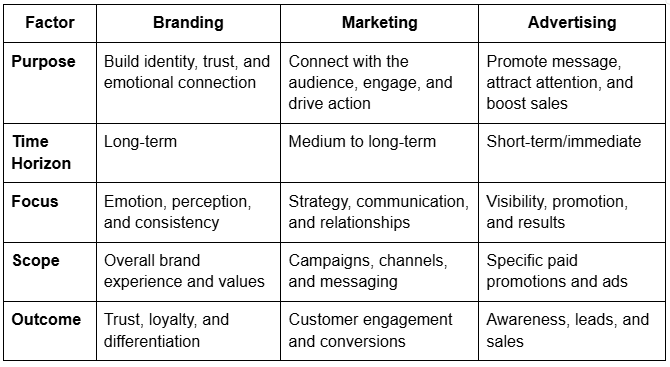
Real-World Example - How KFC Uses Branding, Marketing, and Advertising Together
KFC (Kentucky Fried Chicken) is one of the world’s most popular fast-food brands, known in nearly every country. Its success comes from the smart combination of branding, marketing, and advertising, each playing a unique role.
Branding - Creating a Recognizable Identity
KFC’s branding revolves around Colonel Sanders, secret recipes, and fried chicken comfort. The iconic red-and-white color scheme, the Colonel’s image, and the “finger-lickin’ good” slogan all create a consistent identity recognized worldwide. This branding conveys quality, tradition, and fun, making KFC memorable and trustworthy. The emotional connection with customers comes from the idea of indulgence, family meals, and nostalgia, which strengthens loyalty over decades.
Marketing - Connecting With Customers
KFC’s marketing focuses on reaching people in meaningful ways. From social media campaigns to special promotions like the “$5 Fill Up” or holiday bucket offers, KFC tailors messages to local audiences while keeping the global brand voice consistent. They also use digital marketing, influencer partnerships, and community engagement to educate customers about products, menu changes, and deals, all while keeping the audience engaged and excited.
Advertising - Driving Visibility and Sales
Advertising helps KFC reach new and existing customers quickly. TV commercials, YouTube ads, billboards, and social media promotions highlight new menu items, limited-time offers, or seasonal campaigns. Paid advertising ensures that the brand stays visible in competitive markets, attracting immediate attention and driving sales, while the underlying branding and marketing make sure customers trust and relate to the message.
Why It Works?
KFC shows how all three elements reinforce each other. Branding builds identity and emotional connection, marketing keeps customers engaged and informed, and advertising amplifies the message to reach more people quickly. Together, they create a global brand that is instantly recognizable and consistently appealing.
Which Comes First - Branding, Marketing, or Advertising?
When building a successful business strategy, it’s natural to wonder which should come first: branding, marketing, or advertising. The answer is clear: branding comes first. Branding sets the foundation for everything else. It defines who you are, what your business stands for, and how you want people to perceive you. Without a strong brand identity, marketing campaigns can feel inconsistent, and advertising efforts may grab attention but fail to build trust or loyalty.
Once branding is established, marketing takes the lead. Marketing translates your brand identity into actionable strategies to reach your audience. It identifies the right customers, communicates your message effectively, and nurtures relationships over time. Marketing ensures that every touchpoint, from social media posts and emails to website content, reflects the brand consistently while guiding customers toward engagement and conversion.
Finally, advertising comes into play. Advertising is a tool to amplify your marketing efforts and make your brand visible to more people. Paid campaigns, sponsored content, and promotional ads help increase awareness, drive traffic, and generate sales. However, advertising works best when your brand and marketing strategy are clear. Without them, ads may be noticed but are unlikely to create a lasting impact.
In short, the order matters as follows. First, branding to build identity and trust, then marketing to connect and engage, and finally advertising to amplify and convert. Businesses that follow this sequence create a cohesive strategy, ensuring every effort reinforces the brand and builds long-term success.
How to Align Branding, Marketing, and Advertising Effectively
For a business to grow successfully, branding, marketing, and advertising must work together, not in isolation. Alignment ensures that every message, campaign, and interaction reinforces the brand and resonates with the audience. Below is how to make it work effectively.
1. Create a Clear Brand Strategy
Start by defining your brand’s purpose, values, personality, and promise. This will serve as the guiding framework for all marketing and advertising efforts. When everyone in your team understands the brand, messaging across channels remains consistent, whether it’s social media posts, email campaigns, or ads.
2. Develop a Marketing Plan Based on Your Brand
Marketing should translate your brand into actionable strategies. Identify your target audience, the channels they use, and the types of content that engage them. Make sure every campaign, blog post, or social media update reflects your brand identity and communicates the same values. This way, marketing becomes a bridge between your brand and your customers.
3. Ensure Advertising Supports the Brand and Marketing Goals
Advertising should amplify both branding and marketing, not replace them. Paid campaigns must reflect your brand voice, style, and messaging. Whether it’s a social media ad, a TV commercial, or a Google ad, consistency in tone and visuals ensures that customers recognize and trust the brand while taking action.
4. Maintain Consistency Across All Touchpoints
Consistency is key. From packaging and emails to ads and in-store experiences, every touchpoint should communicate the same brand values and personality. Consistent messaging builds recognition, credibility, and trust, making your marketing and advertising efforts more effective.
5. Measure, Adjust, and Evolve
Regularly review the performance of branding, marketing, and advertising efforts. Track metrics like brand awareness, engagement, conversions, and customer loyalty. Use insights to refine campaigns, adjust messaging, and ensure that all three components continue to work together harmoniously.
By aligning branding, marketing, and advertising effectively, businesses can create a cohesive system where every action strengthens the brand, attracts customers, and drives sustainable growth.
Understanding the Difference Is a Competitive Advantage
Knowing the difference between branding, marketing, and advertising isn’t just theory, it can give your business a real edge. Branding builds trust and emotional connection, marketing turns that brand into meaningful engagement, and advertising helps get your message in front of more people.
When these three work together, your business communicates clearly, attracts the right customers, and creates lasting loyalty. Focusing on one without the others can lead to mixed messages, wasted effort, and missed opportunities.
Understanding how they complement each other helps you make smarter decisions about where to spend your time, energy, and money. Every campaign, post, or ad not only grabs attention but also strengthens your brand and relationships. In today’s competitive market, businesses that get this balance right stand out, grow faster, and earn loyal customers. Simply put, knowing the difference is not optional, it’s key to long-term success.
Or save this article as a PDF for future research, workshops and strategy sessions
.avif)
.avif)
.avif)






.svg)