If Offices don’t come back, Brands will be Held not just Seen
If Offices don’t come back, Brands will be Held not just Seen


If Offices don’t come back, Brands will be Held not just Seen
A few years ago, work had a place.
You walked into an office. You saw your logo on the wall. You absorbed culture without effort, through people, space, routine, and shared moments. Belonging did not need a strategy deck, it was lived through shared office spaces and people.
That world is slowly fading.
Hybrid work has moved from experiment to default. More than 50% of knowledge workers now work remotely at least part time, and nearly 9 out of 10 organisations operate in some hybrid form. Hiring is increasingly borderless. Teams stretch across cities, countries, and time zones.
What we have not fully processed yet is what this shift does to brands.
When offices disappear, culture loses its container. And when culture loses its container, brands risk becoming abstract, distant, and easy to forget.
So the question is no longer how to communicate culture digitally.
The real question is much deeper:
In a world without shared physical spaces, what does a brand actually feel like?
The shifts are already happening
If we look closely, the signals are already visible.
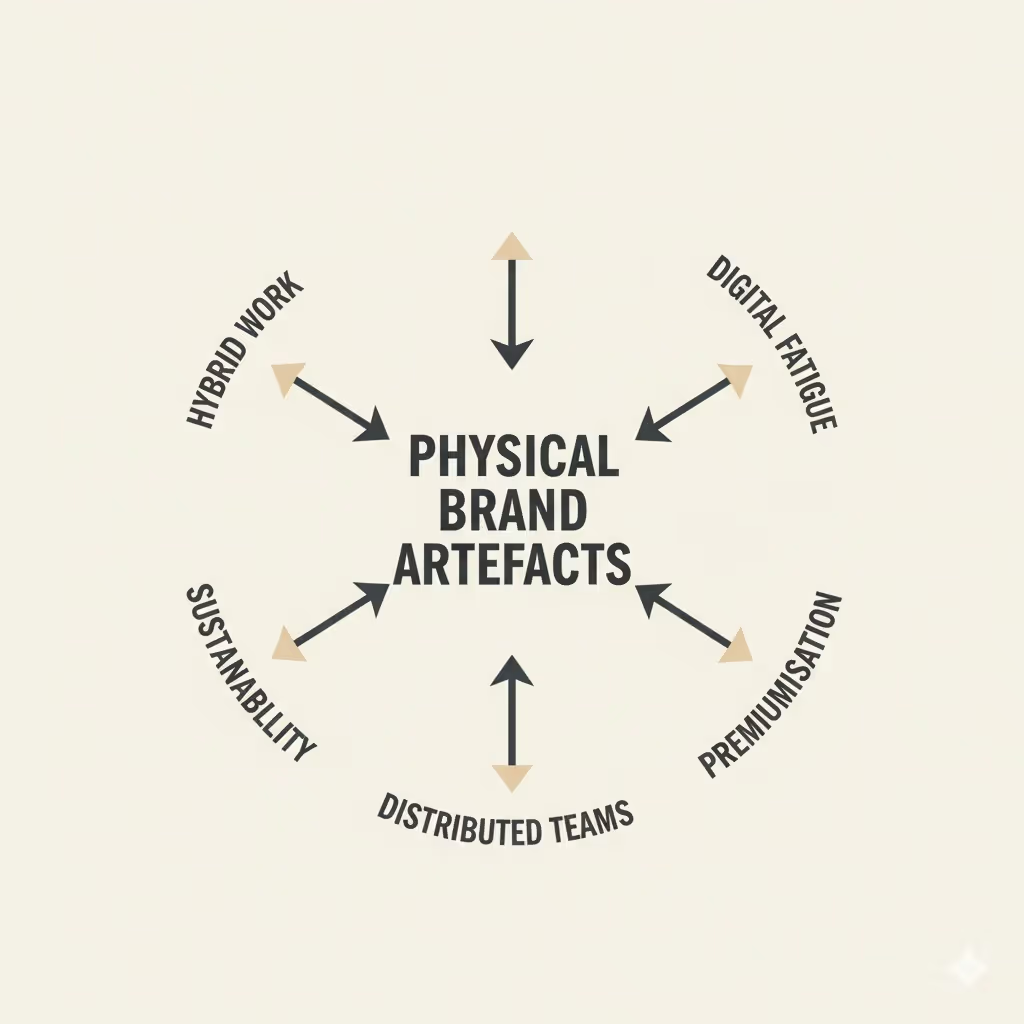
The global branded merchandise market is valued at over $90 billion today and is projected to reach around $115–120 billion by the end of the decade. But this growth is not coming from cheap giveaways or mass distribution.
It is coming from premiumisation.
Brands are investing in fewer items, better materials, and longer-lasting products. Sustainability pressure is part of this, but so is fatigue. Disposable swag is no longer neutral. It signals waste and indifference. People do not want more things. They want things that feel intentional.
Digital fatigue is compounding this shift. People are exposed to 4,000–10,000 digital messages every day, yet recall continues to fall. Physical branded items consistently deliver 85–90 percent brand recall, significantly higher than most digital channels. A single object can generate thousands of impressions over its lifetime, not on a screen, but in daily life.
Work itself has changed too. With hybrid models now dominant, the home desk has quietly become the most consistent workplace for millions of people. For many brands, it is now the only place where they show up physically, every single day.
Taken together, these signals point to something important:
Physical brand artefacts are no longer a nice extra. They are becoming infrastructure.
Why physical objects stay with us
When people talk about merchandise they genuinely love, the language changes.
They do not say “free.”
They do not say “perk.”
They say things like “this felt thoughtful,” “I felt proud using this,” or “this made me feel like I belonged.”
There is strong research behind this.
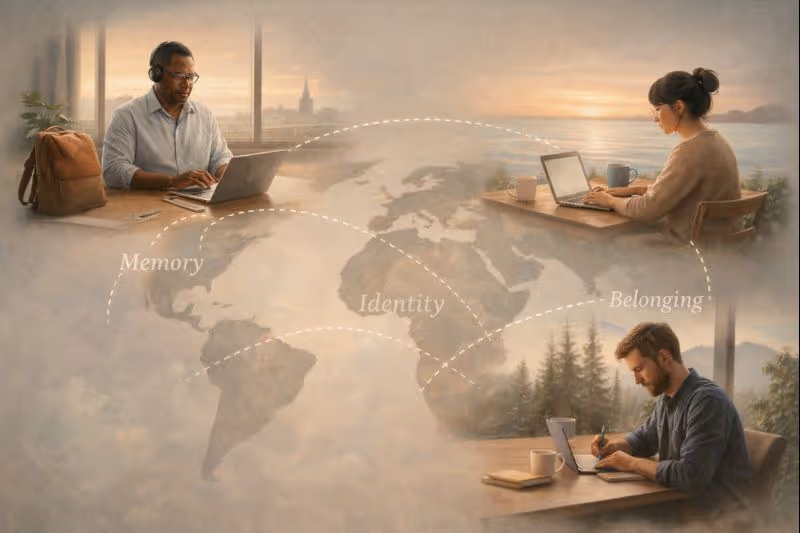
Psychology shows that people integrate meaningful objects into their sense of identity. Objects become part of the extended self. They also act as identity signals. Wearing or using something publicly communicates alignment and belonging without explanation.
Most importantly, physical objects anchor memory. A mug used every morning, a notebook used during early weeks at a job, or a hoodie worn on difficult days becomes tied to emotion and time. Digital experiences rarely create this depth.
Research consistently shows that emotional attachment explains the majority of brand loyalty, far more than rational preference alone. This is why physical artefacts matter so much in a world where switching costs are low and attention is fragmented.
In distributed teams, this effect becomes even stronger. Without offices, objects often become the only shared physical reference point people have.
What leading brands already understand
Some brands have adapted instinctively.
Notion, a remote-first company with no central office, sends new hires a carefully curated onboarding kit. These are not generic logo items. They are retail-grade, design-led objects meant for daily use. They show up on desks and video calls. Over time, they replace the office as the first cultural touchpoint. The kits are reordered continuously because the approach works.
Patagonia took a broader path. It turned merchandise into values infrastructure. From the “Don’t Buy This Jacket” campaign to the Worn Wear repair program, every product reinforces a belief system. The outcome is not just loyalty but depth. Patagonia sees around 80% repeat behaviour, maintains premium pricing, and spends far less on traditional marketing than many competitors.
Airbnb embedded belonging into rituals, onboarding moments, and physical experiences long before remote work became widespread. Even as teams became globally distributed, culture held because it was never dependent on buildings alone.
Across industries, the pattern is consistent:
“ When brands treat physical artefacts as carriers of identity and values, loyalty becomes durable.”

Looking ahead to a realistic 2035
Now imagine this ten years from now.
By 2035, distributed work is normal. Teams collaborate across continents. AI agents handle large parts of execution. Physical offices still exist, but they are occasional, symbolic spaces rather than cultural centres.
In this world, the most frequent physical interaction people have with a brand is not a building.It is an object.
Onboarding happens at home. Culture is delivered deliberately. Identity travels in packages, not hallways. AI helps personalise experiences at scale, but the emotional mechanism remains human.
Brands that fail to design for this future will feel distant and interchangeable. Brands that succeed will feel tangible and human, even when their people never meet.
Why a secondary market for brand artefacts will emerge
There is another signal worth paying attention to.
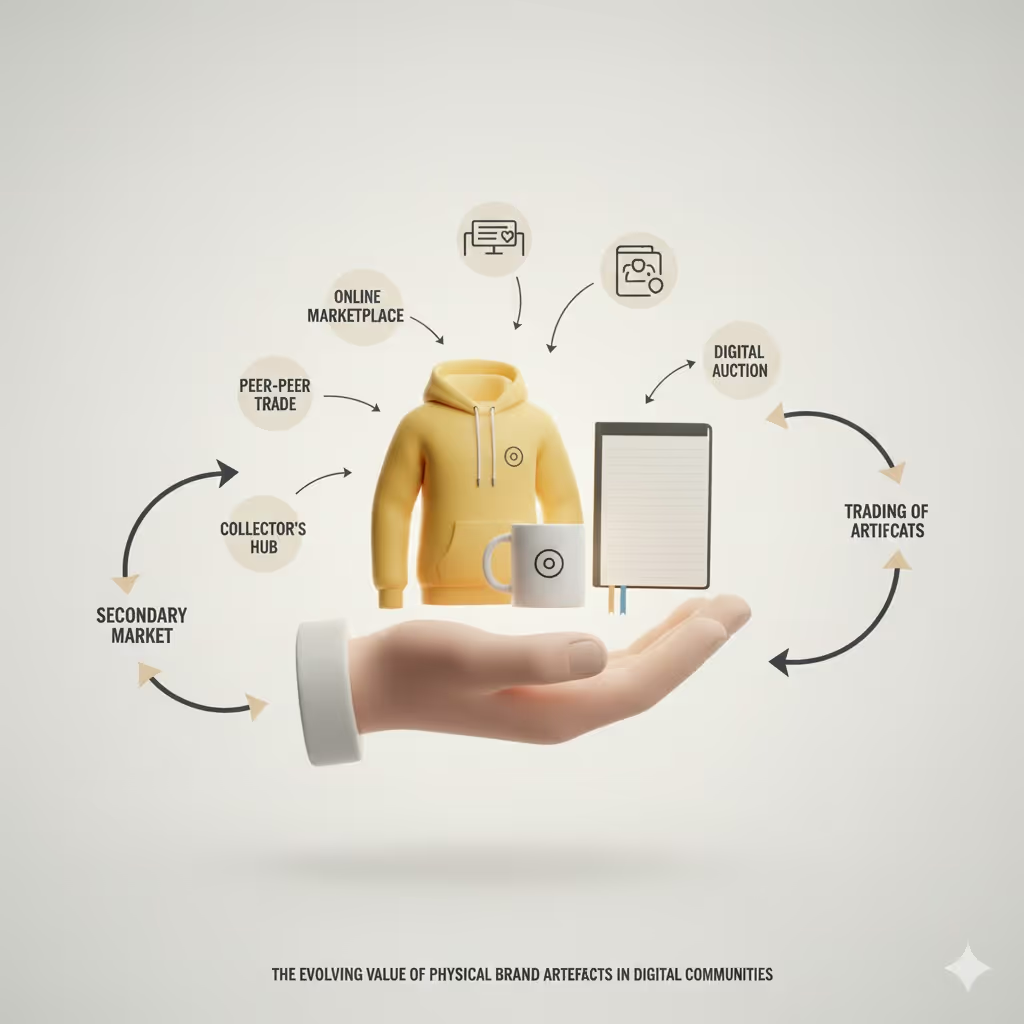
When objects are meaningful, durable, and well designed, they do not disappear after use. They circulate.
We already see this in sneakers, streetwear, creator merchandise, and limited drops. The same logic will extend to brand artefacts. Limited editions, collaborations, event-linked pieces, and resale are natural outcomes when people value what they receive.
A secondary market does not emerge because of hype.
It emerges because of meaning.
That shift fundamentally changes how brands should think about merchandise.
A note from our own experience
We felt this shift firsthand while designing our own onboarding kit at Become.
The goal was not to impress or overbrand. It was to communicate culture quietly. We focused on curation, design, and intent rather than volume.
What stayed with us was not the unboxing moment, but what happened after. People kept the items. They used them daily. They spoke about how the kit made them feel welcomed and valued.
It reinforced something our research already showed:
“When artefacts are designed with care, they outlive the moment they are given.”
What brands need to decide now
This is not about doing more merchandise.
It is about doing less, better, and with intent.
Brands that want to remain relevant over the next decade will need to:
- Treat physical artefacts as culture infrastructure
- Design for daily life, not campaign moments
- Make sustainability a baseline, not a feature
- Measure success in retention, recall, and advocacy
- Think in systems, not one-off giveaways.
A final thought
When offices don’t come back, brands do not disappear.
They lose gravity.
Physical artefacts are how they regain it.
If you’re ready to build physical brand artefacts that carry culture and belonging in a distributed world, we’re open to conversations.
.svg)








.svg)




.png)